
You got a DUI, had your license suspended, or were caught driving without insurance — and now someone's telling you that you need an "SR-22." If you're confused about what that actually means, how much it's going to cost you, and where to get it, you're not alone. This is one of the most misunderstood requirements in auto insurance, and most drivers Google it in a panic.
- SR-22 is NOT a type of insurance — it's a certificate your insurer files with your state DMV proving you have coverage.
- The filing fee is just $15–$50, but expect your premiums to jump 50–80% due to the violation that triggered it.
- Not every insurer files SR-22s — you may need to switch to a high-risk carrier.
- Most filings happen same-day once you purchase a qualifying policy (timing varies by state).
- Shopping around can save $400–$900/year — rates vary dramatically between carriers for high-risk drivers.
SR-22 Is a Certificate, Not a Policy — Here's Why That Matters
Here's the thing: an SR-22 is not a separate insurance product you buy. It's a form — officially called a Certificate of Financial Responsibility — that your auto insurer files electronically with your state DMV on your behalf. It's proof that you carry at least the minimum required liability coverage.
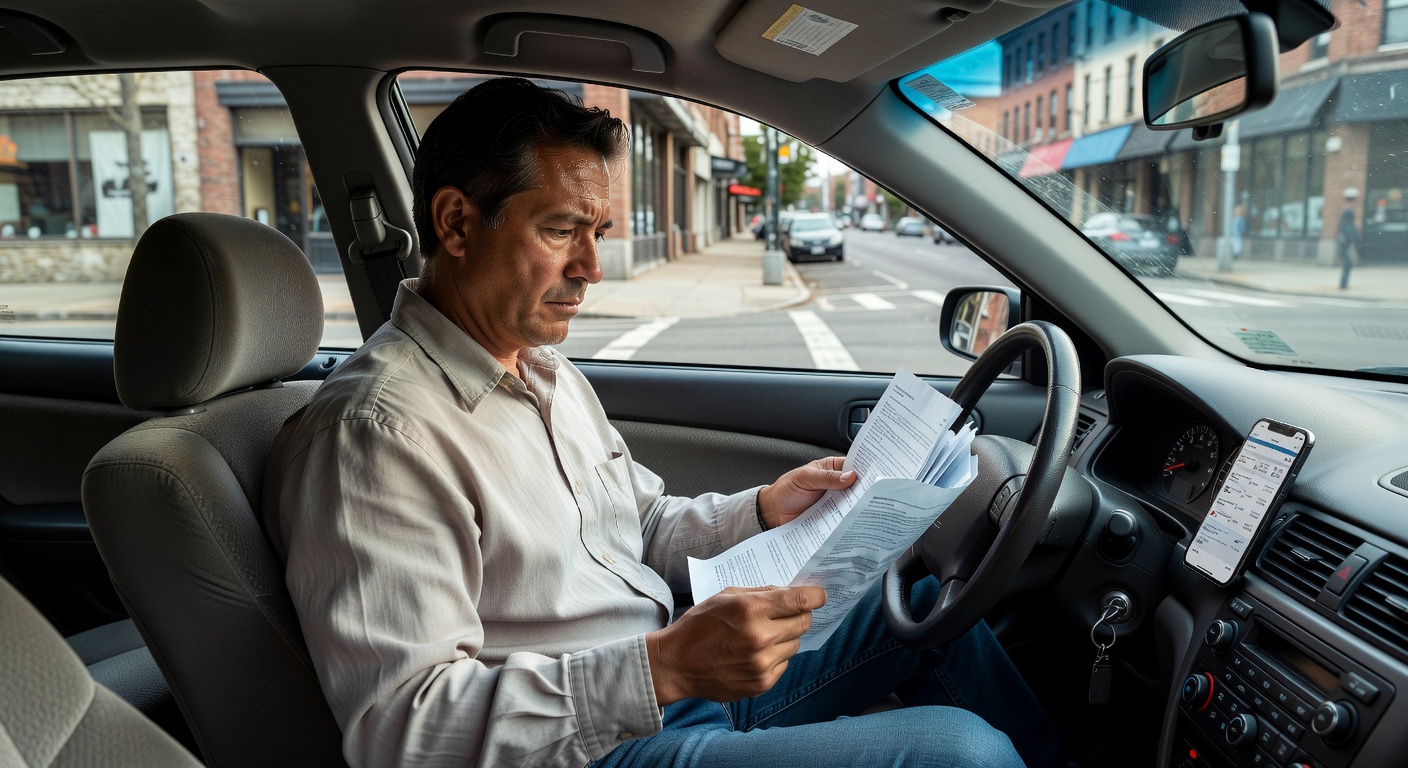
You typically need one after a serious violation or pattern of risky driving. Common triggers include a DUI or DWI conviction, driving without insurance, an at-fault accident while uninsured, a license suspension or revocation, and accumulating too many points on your driving record. Some states also require it after a reckless driving charge.
Once your insurer files the SR-22 with your DMV, the state can verify your coverage status in real time. If your policy lapses or cancels for any reason, your insurer is legally required to notify the DMV — and your license can be re-suspended immediately. That's why continuous coverage isn't optional; it's the whole point.
Not all insurers offer SR-22 filings — you must ask specifically. If your current carrier doesn't file SR-22s, you'll need to shop a non-standard or high-risk insurer.
What SR-22 Insurance Actually Costs in 2026
The filing fee itself is almost irrelevant. Most states charge between $15 and $50 — a one-time fee paid when your insurer submits the certificate. The real financial hit is your premium increase.
What you'll actually pay depends on the violation that triggered the requirement. Here's a realistic breakdown for 2026:
| Violation | Added Annual Premium (Est.) | Typical Duration |
|---|---|---|
| DUI / DWI | $1,200 – $2,400/yr | 3 years |
| At-fault accident (uninsured) | $600 – $1,000/yr | 3 years |
| Reckless driving | $800 – $1,500/yr | 3 years |
Take Marcus, a driver in Texas who got a DUI in late 2025. His previous insurer dropped him. He ended up with a policy through a non-standard carrier at $1,840/year — steep, but $600 less than his first quote. The difference? He called three carriers before committing. That's the whole game.
Shopping multiple insurers can save $400–$900/year on SR-22 coverage. Rates vary dramatically by carrier for the same risk profile — don't accept the first quote you get.
How to Get SR-22 Insurance — Fast
The process is simpler than most people expect. You don't file the SR-22 yourself — your insurer does it for you. Here's how to get it done, ideally same-day.
-
1
Call your current insurer first. Ask directly: "Do you file SR-22 certificates?" Many standard carriers don't, but it's worth checking before you shop around.
-
2
If declined, go straight to high-risk carriers. Progressive, State Farm, The General, and Dairyland all routinely handle SR-22 filings. Non-standard insurers specialize in exactly this situation.
-
3
Buy a policy that meets your state's minimum liability limits. Your state DMV specifies these — make sure the policy satisfies them exactly.
-
4
Pay the filing fee ($15–$50). This is separate from your premium — usually collected at policy purchase.
-
5
Your insurer files electronically with your DMV — typically the same day in most states. Some states update their records within hours; a handful may take a day or two.
-
6
Maintain continuous coverage for the full required period — usually 3 years. If your policy cancels or lapses even for a day, the clock can reset and your license is at risk.
The fastest way to get SR-22 insurance: call a non-standard auto insurer directly and ask them to file same-day. Don't wait for your current insurer to figure it out if they're not set up for it — every day without coverage is a day your license is exposed.
High-Risk Doesn't Mean No Options
Honestly, most SR-22 drivers overpay because they accept the first policy offered or stick with a carrier that's not competitive for high-risk profiles. Rates between insurers for the same violation can vary by 40–60%. That's not a rounding error — that's hundreds of dollars every year. If you want to see how carriers stack up in your state, our high-risk auto insurance comparison breaks down the top options by violation type and state.
"High-risk doesn't mean no options — it means you need to compare more carefully."
The comparison matters even more after a serious violation. Get at least three quotes, and make sure each insurer confirms they'll file the SR-22 before you commit.
Ready to find the best rate for your SR-22?
Compare quotes from top high-risk carriers in under 2 minutes — free, no obligation.
Compare SR-22 Quotes — Free & InstantFrequently Asked Questions
How long do I need to carry SR-22 insurance?
Most states require the SR-22 filing for 3 years, though this can range from 1 to 5 years depending on your violation and state. If your policy lapses at any point during that period, your insurer notifies the DMV and your license can be re-suspended — the required period may also reset.
Can I get SR-22 insurance if I don't own a car?
Yes — this is called a non-owner SR-22 policy. It covers you when driving borrowed or rented vehicles and still satisfies your state's filing requirement. Non-owner policies are typically cheaper than standard SR-22 coverage since there's no owned vehicle on the policy.
Does SR-22 insurance cost more than regular car insurance?
The SR-22 certificate itself is just a $15–$50 filing fee. The real cost increase comes from the violation on your record — the same incident that triggered the SR-22 requirement also flags you as a higher-risk driver, pushing premiums up 50–80% compared to a clean-record driver. Shopping multiple carriers is the most effective way to reduce that impact.
The Short Version
SR-22 isn't something to fear — it's a paperwork requirement with a clear process and a defined end date. The violation on your record is the real cost driver. Focus on finding a carrier that handles SR-22 filings, compare at least three quotes, and keep your coverage continuous for the full required period. Three years goes faster than you think, and once it's done, it's done.
Don't overpay while you wait out the 3 years.
A few phone calls to the right carriers can cut your SR-22 premium by hundreds annually. Start comparing now.
Find My Best SR-22 Rate